★ EDITORIAL SPECIAL BOOM BAP COALITION · GEAR
Behringer vs. Akai
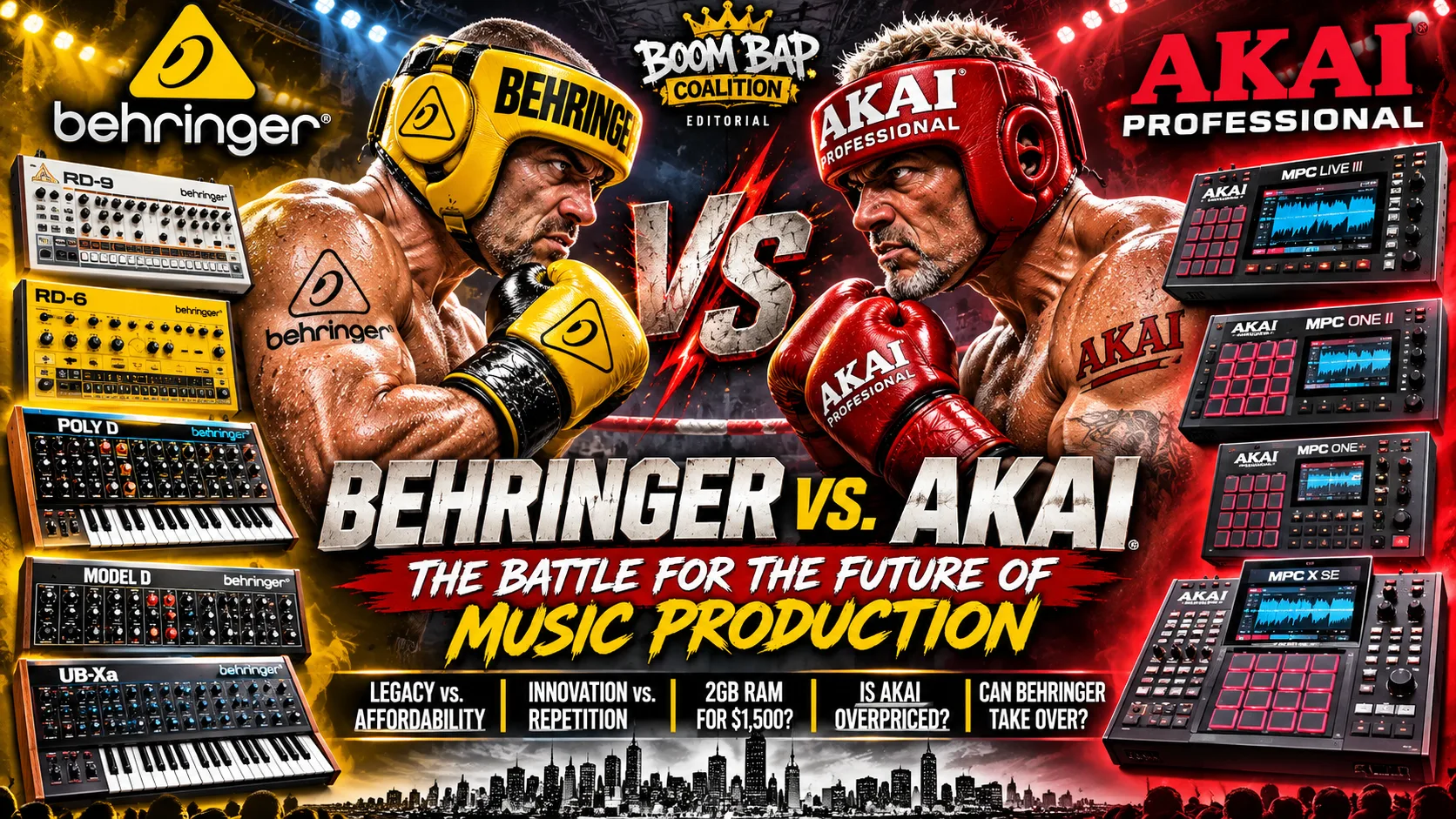
The battle for the future of music production. For decades Akai has shaped hip-hop production. Now Behringer’s low-cost hardware is forcing a bigger conversation: are producers paying for innovation, or buying the same promise again and again?
The King of the Drum Machine Has Some Explaining to Do
For decades, Akai Professional has been royalty in hip-hop. From the MPC60 and MPC3000 to the MPC2000XL and modern standalone machines, its hardware helped define the sound and workflow of generations of producers. But respecting that history doesn’t mean giving the company a free pass. How many times should a producer have to purchase a refreshed version of a familiar machine? Some updates are substantial; others invite the question of whether the improvement justifies the expense.
Two Gigabytes of RAM? Seriously?
The MPC Live II shipped with 2GB of RAM. For a premium standalone workstation running samples, effects and instruments, that limitation deserves scrutiny. Embedded audio machines cannot be judged solely by PC specifications: efficiency, latency and stability matter. But buyers can reasonably ask why greater headroom wasn’t provided sooner. The MPC Live III’s move to 8GB shows that more capable hardware is possible—at a price that still demands a serious investment.
Enter Behringer: A Different Price Conversation
Behringer has made affordability central to its reputation, with drum machines and synthesizers at prices far below many premium workstations. A compact analog drum machine costing a few hundred dollars is not a feature-for-feature competitor to an MPC with sampling, storage, touchscreen editing, plug-ins and audio recording. Still, it forces a useful question: how can manufacturers make serious creative tools accessible to musicians who cannot spend four figures?
What About the Manufacturing Strategy?
Music Tribe, Behringer’s parent company, has invested in manufacturing infrastructure and vertical integration. Scale and production control can help support lower prices. But low prices alone aren’t enough: long-term reliability, service, repairability and responsible business practices matter, too. Producers need affordable gear that lasts.
Are We Paying for Innovation—or Nostalgia?
The MPC name has an emotional pull because so many classic records were made on these machines. Yet heritage shouldn’t replace meaningful innovation. A cosmetic revision isn’t the same as a faster workflow, stronger performance, deeper sampling tools or long-term support for hardware people already own. Manufacturers should show precisely what an upgrade changes for a working producer.
Open Source and Independent Developers
Community firmware projects and alternative workflows reveal how strongly musicians value control over their equipment. That does not mean Akai has made its entire MPC operating system open source, nor does it establish that any openness is a response to Behringer. The larger opportunity is clear: better documented developer tools, sustainable support and community-driven features could extend hardware life.
Leadership: Listen to the People Making the Beats
Andy Mac is a recognizable public representative of Akai’s MPC products, but product direction is not one person’s responsibility. The issue isn’t anyone’s age or appearance. It’s whether the company is hearing from working beatmakers, young producers, longtime MPC users and independent developers. A stronger future comes from combining experience with fresh perspectives.
Could Behringer Become the People’s Champion?
Competition can be a win for musicians. If Behringer can deliver capable, reliable samplers at lower prices, Akai will face pressure to offer more value. If Akai responds with better features, more accessible models and longer support, producers benefit. But building a mature standalone sampling ecosystem requires more than copying the appearance of classic equipment.
Let the Producers Win
Give us enough memory and processing headroom. Give us meaningful software updates, repairable hardware and workflows that make music easier to create. Give us affordable choices without sacrificing quality. Akai has the legacy. Behringer has made price a central part of the conversation. Neither deserves blind loyalty. Let the companies compete for our business—and let the producers win.
Preserving the culture. Challenging the industry. Fighting for affordable music production.